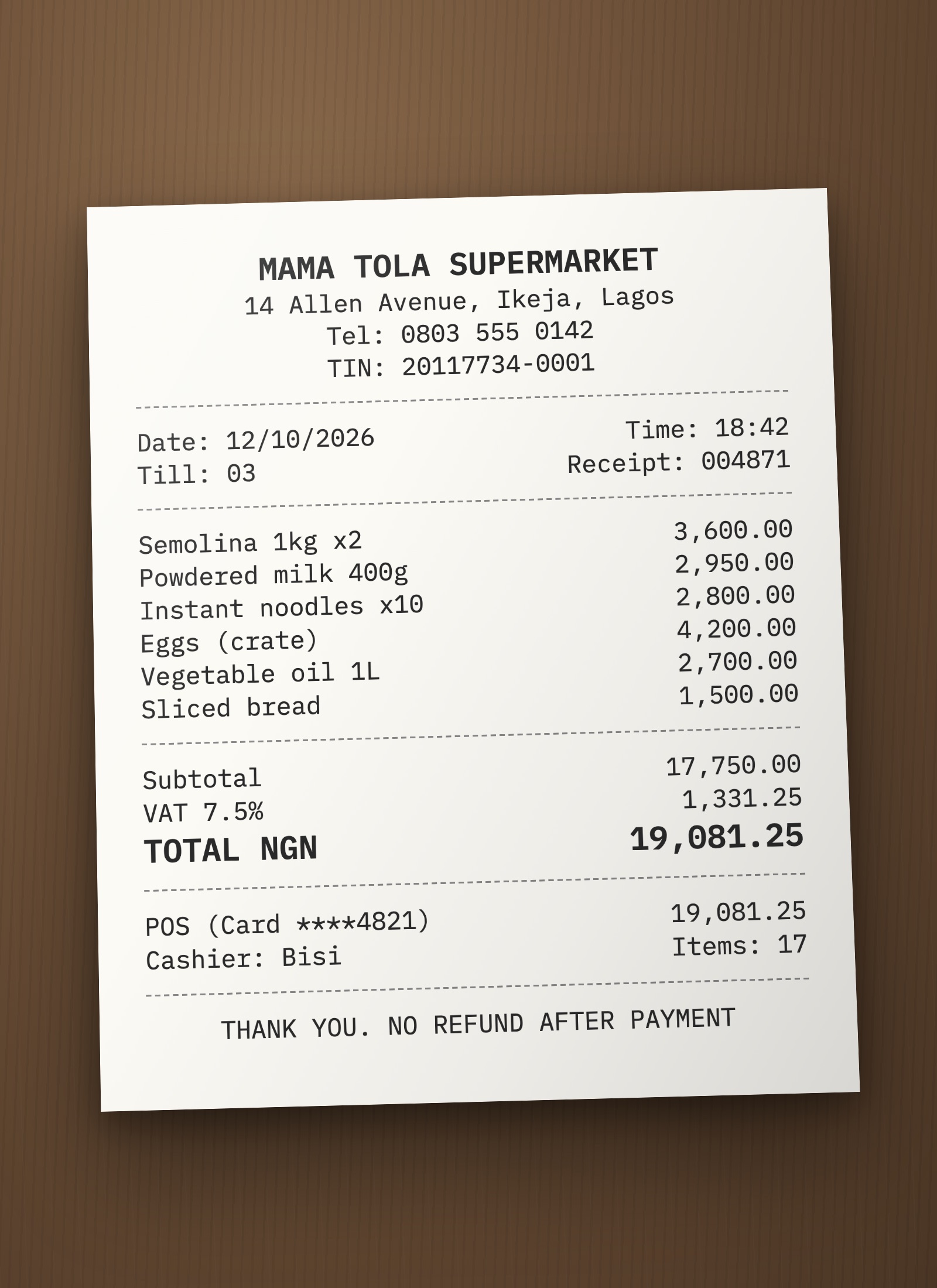
Expense and receipt processing
Turn photos of receipts into line items and totals, and send only the doubtful fields for review.
Receipts, invoices, payslips, statements and handwritten forms, from a scan or a phone photo. Give MIST-Extract a JSON template and it fills it in, telling you how sure it is of each value.
$1 of free credit · open weights on Hugging Face
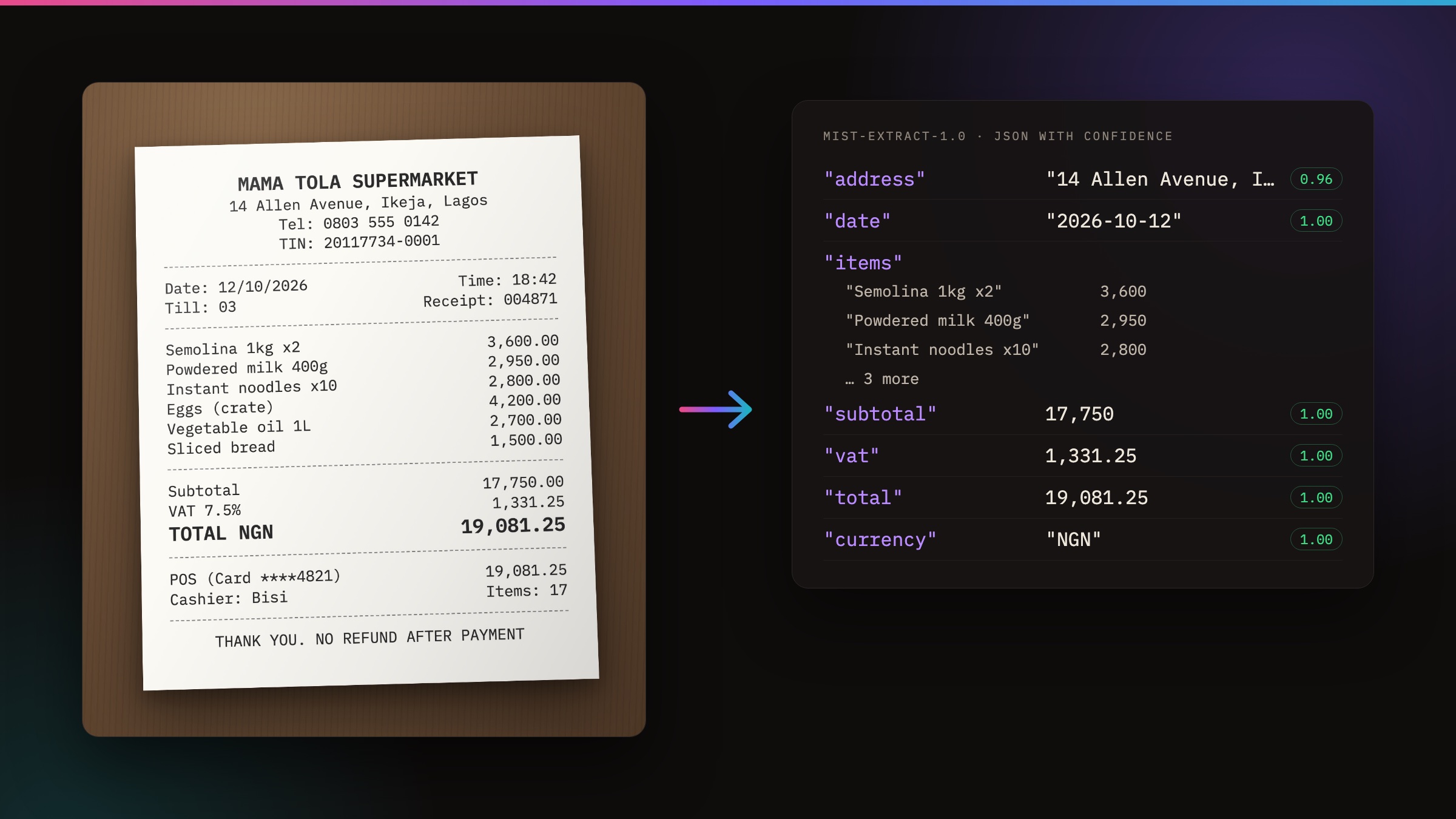
Reads phone photos taken at an angle, scans and plain text, or text and an image together.
Fills in handwritten forms and waybills, including ticked boxes.
The answer always has exactly your template’s shape: nested objects, lists and fixed options included.
Calibrated: values it rates 0.99 or higher are right 99.9% of the time, so you can automate those and review the rest.
Built for the everyday documents of African businesses: naira, cedi and shilling amounts, local layouts and names.
Run it on the API, or download it from Hugging Face and keep documents inside your own systems.
Pick a document. The output on the right is exactly what MIST-Extract-1.0 returned on our API, confidences included.
Sample documents with invented companies and people. Confidences below 0.8 are marked: the model is telling you to check that field.
Published results on held-out data, against models of the same size.
486 held-out documents: receipts, notices, emails, contracts and more. A document counts only if every field is right.
MasakhaNER 2.0, 21 African languages, field accuracy.
Turn photos of receipts into line items and totals, and send only the doubtful fields for review.
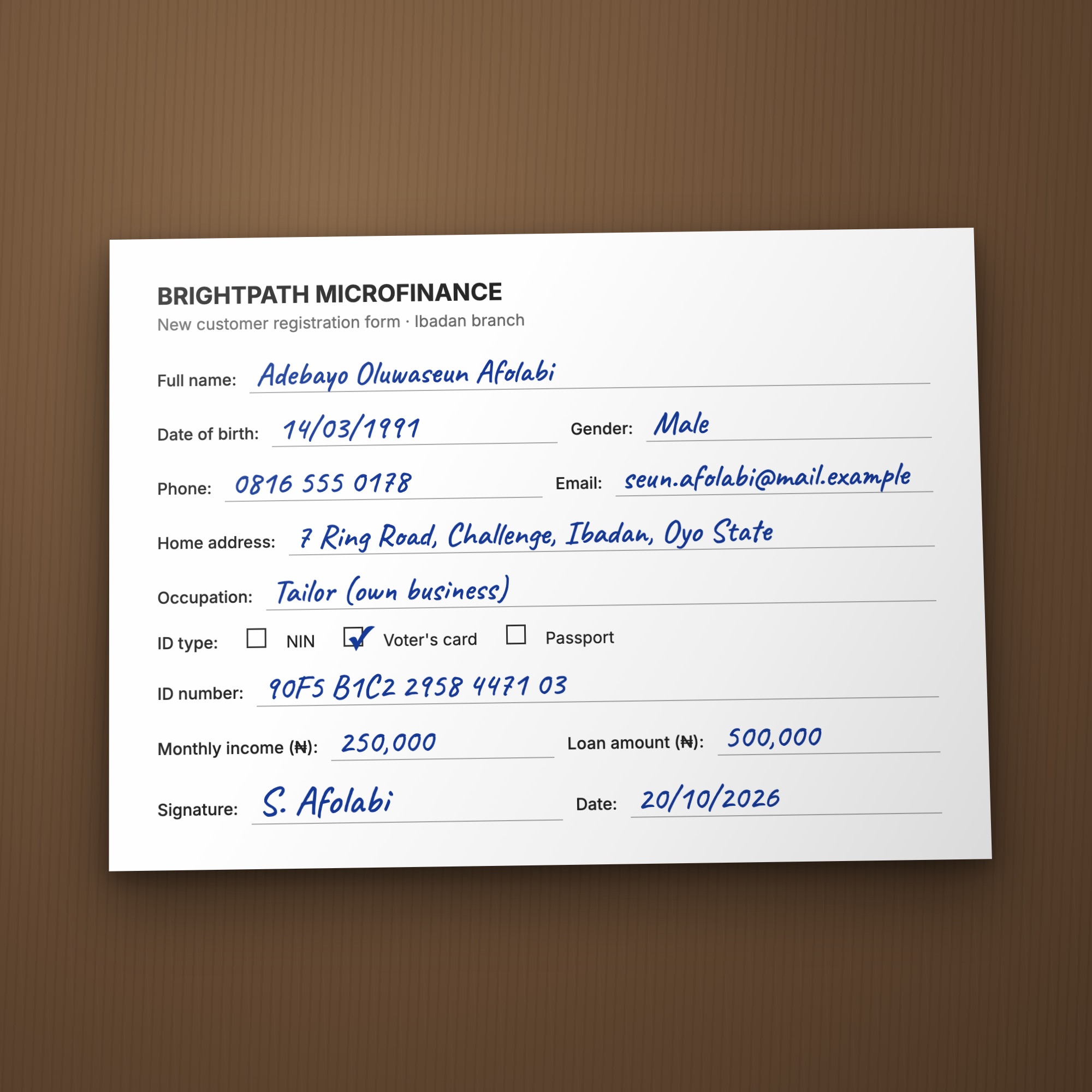
Read payslips, bank statements and handwritten application forms into your loan or KYC system.
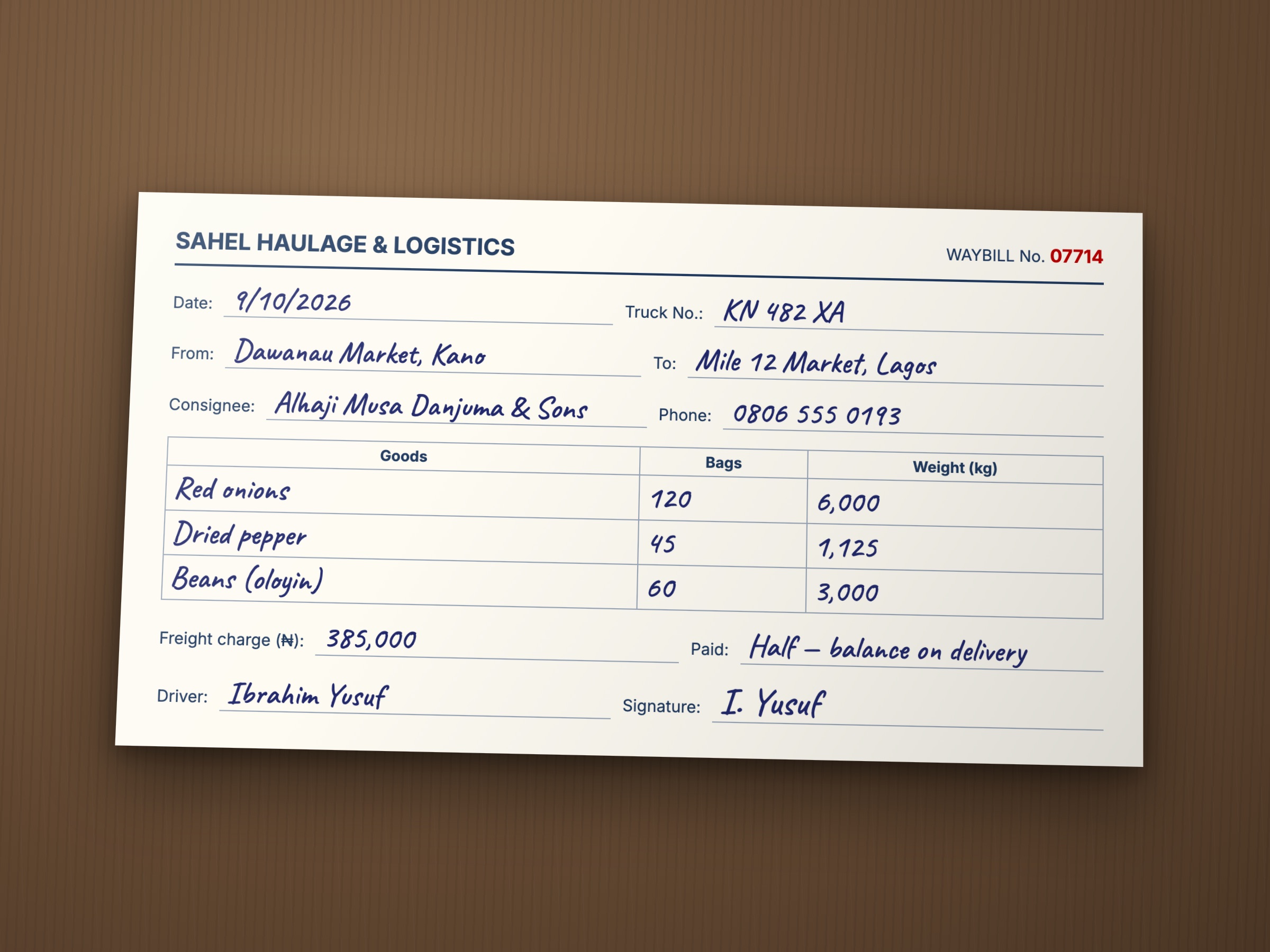
Capture waybills and freight invoices, from a clean PDF or a photo taken at the depot.
MIST-Extract turns documents into JSON from a template, with a calibrated confidence on every field. It fits wherever people still retype receipts, messages and forms, especially the everyday documents of African businesses that general-purpose extractors handle poorly.
The clearest fit: mobile-money and bank messages carry the data, but rarely in a structured form.
WatchTreat extracted figures as inputs to your own checks, not as verified facts: a forged screenshot extracts perfectly. Pair it with a decision model or rules for authenticity.
WatchIt extracts what a document says; it does not interpret it. Clause meaning, liability and validity stay with your lawyers.
WatchIDs and personal records are sensitive: keep a person on anything that changes someone’s status.
Documents in, JSON out, with a confidence on every field.
MIST-Extract at 2B, for documents at volume on your own GPUs.
| MIST-Extract-1.0 → | MIST-Extract-Flash-1.0 → | |
|---|---|---|
| Parameters | 4B | 2B |
| English documents fully right (held-out) | 91.8% | 90.5% |
| Named entities, 21 African languages | 0.728 | 0.701 |
| Field accuracy, all held-out documents | 0.898 | 0.879 |
| Speed, one RTX A6000 | 6.0 docs/s | 9.7 docs/s |
| Confidence calibration error (ECE) | 0.008 | 0.022 |
| Best for | Top accuracy, general and African documents | Volume and receipts |
| On the Olaverse API | Yes | No, self-host only |
91.8% of held-out English documents fully right (NuExtract3: 67.9%), 0.728 on African-language named entities, calibrated confidence on every field.
Same templates and confidence at 2B: 9.7 documents per second on one GPU, 90.5% of English documents fully right.
The fastest start: an API key, pay as you go, $1 of free credit.
Download the model and run it on your own GPUs.
A private deployment, tuned to your data and workflows.
Text, one image (a scan or a photo, PNG or JPEG), or both. Large photos are scaled down automatically, and you’re never charged extra for a high-resolution image.
With a JSON template: each leaf names a type (verbatim-string, string, number, integer, date, boolean), a list of options for a choice, or a list for repeated items. It uses the same format as NuExtract, so existing templates move across unchanged.
It’s calibrated: across many fields, values rated 0.9 are right about 90% of the time. Set a threshold, process confident fields automatically and send the rest to a person.
No. Documents are processed in memory to return the result, never logged, and never used for training.
Yes. The weights are open on Hugging Face and serve on vLLM. The API is the quickest start; self-hosting keeps data entirely in your environment.